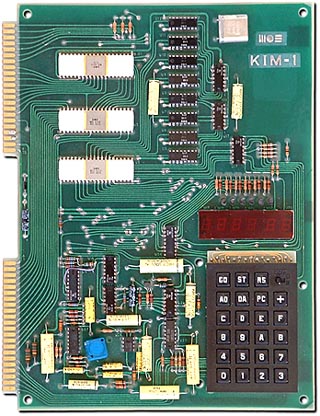
• The Electricity Electricity is a form of energy that has two main advantages over other forms of energy, one of which is to be carried easily and without loss of energy and another is that it transforms easily into any other type of energy and vice versa.
• All bodies are composed of tiny particles called atoms. The atom consists of a core and an outer layer. The nucleus is composed of particles called protons a positive charge and others with no electric charge called neutrons. The outer layer is composed of negatively charged electrons and almost no mass. The atom can gain or lose electrons easily.
· Electricity: electron beams movement of a body.
DC or 0W to 24W.
or Control elements: they control the flow of electric current in a circuit . §
Switch: is an element with two stable states, an open circuit and closed. §
button: also serves to open or close the electrical circuit, but only has a steady state. There are buttons normally open only passes current during the time that remains depressed. And there are other buttons running upside closed. §
two-position switch: has two stable positions, in a position connects a portion of the circuit and on the other hand, another part of the circuit. § Key
crossing: is a four-pole switch are connected in pairs. Used to change the direction of rotation of DC motors. §
Relay: is a switch instead of being driven normally powered by electric current flow. §
Limit: is a switch that is operated mechanically by the movement of some pieces. Elements §
drivers: are wires formed by conductive materials (copper, aluminum, ...) and wear insulating coatings (plastics, glass,.)
§ Elements receptors: are those that consume electrical energy transforming it into another energy type (bell, lamp, ...) §
protection elements: there are two types of protection elements: elements that protect the electrical circuit and other elements that protect people. Major accidents that may occur in a circuit are: short and over voltage. §
Short: resistance occurs when the circuit is reduced to 0 at some point in the circuit (to join two cables), so that the intensity is too large, burning the driver for its weakest part. §
Overload: occurs when the circuit have a voltage slightly higher than normal for a certain time.
§ protecting the circuit elements: §
Fuse: consists of a thin wire inserted in a circuit to be the weakest part, so when it comes getting a high current wire melts and opens the circuit. §
Switch Automatic: is the one in our homes. Make the same effect as the fuse but automatically, using the magnetic effect of current. Elements §
protect people:
§ breaker: it looks like the machine. It is a device that detects current leakage and opens the circuit, is based on the magnetic field creates an electrical conductor wound on a magnetic core. Protect people from electrocution from contact with any part of the circuit (especially electrical enclosures). It is situated at the entrance of housing. §
Ground: the ground protection is drivers union with all metal parts of a plant are not intended for electrical conduction. §
units and electrical quantities:
§ Amperage (I) is the number of electrons passing in one second by one point in the circuit. Its unit is the ampere (A). §
Voltage (V or U): when electrons flow between two points in an electrical circuit, the deslazamiento is possible because the difference in charges (positive and negative) between these two points. This difference is called the load voltage. Its unit is the volt
(v).
§ Electrical resistance (R): is the opposition that all bodies have to pass electrical current. Its unit is the ohm (_). Depending on the opposition to the passage of electrical current may be conductive materials, insulators and semiconductors. §
Ohm's Law: is a law that relates the three main variables of an electrical circuit (I, V and R). Formula: V = I. R, I = V ÷ R R = V ÷
I. §
power and power: electric power is the amount of energy supplied or consumed per unit of time. Indicates the rate at which energy is expended. Its symbol is (P) and its unit is the watt (W). It is calculated using these formulas: P = V
. I, P = V ² ÷ R P = I ². R
Electric power is the product of the power by the time (E).
E = P. T §
Connection types: in an electrical circuit elements can be connected in three ways: serial, parallel or mixed.
Formulas:
Series connection:
Rt = R ¹ + R ² + R ³ ...
Vt = V ¹ + V ² + V ³ ...
It = R ¹ = R ² = I ³ ...
Parallel:
Rt = R ¹. R ² ÷ R ¹ + R ²
Vt = V ¹ = V ² ...
RESISTANCE
property of an object or substance that causes it to resist or oppose the passage of an electric current. The resistance of an electrical circuit determined by Ohm's Law call how much current flows in the circuit when a voltage is determined. The unit of resistance is the ohm, which is the resistance of a conductor if it is traversed by a current of one ampere when a voltage of 1 volt. The common abbreviation for electric resistance is R, and the symbol ohm is the Greek letter omega, Ω. In some electrical cαlculos used the inverse of resistance, 1 / R, which is called conductance and is represented by G. The unit of conductance is siemens, symbol S. Still found in some works the old name of this unit, mho.

Capacitor
is one of the most used components in the circuits electric.
A capacitor is a passive component that has the quality of stored electrical energy. This consists of two sheets of conductive material (metal) that are separated by a dielectric (insulating material). In a simple capacitor, whatever its appearance, will have two terminals, which in turn are connected to two conductive plates.

TRANSFORMER
electric device consisting of a coil of wire next to one or several more reels, which are used to join two or more circuits, alternating current (AC) by exploiting the effect of induction between the coils. The coil connected to the source of energy is called primary coil. The other coils are called secondary windings. A transformer whose secondary voltage is greater than the primary transformer is called. If the secondary voltage is lower than the primary device called a transformer. The product of voltage-current intensity is constant in each set of coils, so that in an increasing transformer secondary winding voltage is accompanied by a corresponding decrease in current. The amount varies according to how winding terminals and sockets have. Are at least three for auto-transformers and four ahead for transformers. Even if you do not have polarity magnetic orientation of the windings

DIODE electronic component that allows the passage of current in one direction only. The first such devices were diodes vacuum tube, consisting of a receptacle glass or steel vacuum containing two electrodes: a cathode and an anode. Since electrons can flow in one direction, from cathode to the anode, the diode vacuum tube could be used in the rectification. The diodes used in most modern electronic circuits are diodes made of semiconductor material. The simplest, the diode contact point of germanium, was created in the early days of radio , when the radio signal was detected using a germanium crystal and a thin cable terminated in a point and resting on him. In germanium diodes (or silicon) modern, cable and a tiny glass plate are mounted inside a small glass tube and connected to two wires that are soldered to the ends of the tube .

COIL
coils (also called inducers) consists of a coiled thread. Passing a current through coil around it creates a magnetic field that tends to resist sudden changes in the intensity of the current. As a capacitor, a coil can be used to differentiate between signals slowly changing fast (high and low frequencies). By using a combination with a condenser coil, the coil voltage reaches a maximum value at a specific frequency that depends on the capacitance and inductance. This principle is used in radio receivers to select a specific frequency by a variable capacitor.

TRANSISTORS Transistors consist of semiconductors. These are materials such as silicon or germanium, doped (ie, they have embedded small amounts of foreign matter), so that there is an excess or a deficiency of free electrons. In the first case, it is said that the semiconductor is n-type, and the second, which is of type p. Combining n-type material p-type diode can occur. When it connects to a battery so that the p-type material is positive and the negative n-type material, electrons are repelled from the negative battery terminal and go, without any hindrance, to the p region, which has no electrons. With the battery reversed, the electrons reach the p material can be passed only with great difficulty to the material n, which is full of free electrons, in which case the current is practically zero.

INTEGRATED CIRCUITS
Most chips are small chunks or chips of silicon, 2 to 4 mm2, on which transistors are fabricated. Photolithography allows the designer to create hundreds of thousands of transistors on a single chip properly placing the number of regions n-type p. During manufacturing, these regions are interconnected through tiny wires in order to produce specialized circuits complex. These are called monolithic integrated circuits for being manufactured on a single crystal silicon. The chips require much less space and power, and its manufacture is cheaper than an equivalent circuit composed of individual transistors.


/CAPITULO%202%20ACCESORIOS%20DE%20UN%20TRANSFORMADOR/imagencap2/1000KVA.jpg)